Part 4
At first I thought there had to be some mistake.
“I’m sorry,” I said when Troy identified himself. “I don’t have minors in my household. I’m on my honeymoon in Scotland. Are you sure you have the right person?”
He sounded puzzled.
“The report identifies you as the primary caregiver for three minor siblings—Carter, Dylan, and Sienna Pierce—and states that you abruptly stopped caring for them without making alternate arrangements, which placed them at risk.”
The pieces snapped together with sickening clarity.
“My mother filed that report,” I said. “And she lied. Carter and Dylan are nineteen. They’re adults. Sienna is seventeen, but she lives with our parents, who are her legal guardians. I am their twenty-nine-year-old brother. I have no custody, no guardianship, and no legal responsibility for any of them.”
There was a long pause.
Then Troy asked, carefully, if I could explain my actual role in the family.
So I did.
I told him everything—the parentification that started when I was ten, the nineteen years of unpaid child care, the boundaries I tried to set before the wedding, the honeymoon we had planned for months, my mother’s insistence that I cancel it to watch teenagers, and the weeks of harassment that followed when I refused.
He listened quietly, and I could hear him typing.
When I finished, he said something that changed the shape of the whole situation.
“Mr. Pierce, I want to be very clear. The report was filed by your mother. In trying to make you sound neglectful, she made several concerning admissions about her own parenting.”
He told me CPS would be doing a home evaluation within seventy-two hours. They would interview the children, inspect the house, and assess whether the minors in the home were actually being adequately cared for.
“For the record,” he added, “you are not in any legal trouble. You are an adult sibling with no custody arrangement. Your mother’s claim that you abandoned minor children is factually incorrect. But her admission that she cannot adequately care for her children without your constant presence is deeply concerning.”
After we hung up, I called Dr. Whitaker again.
“CPS is investigating my parents,” I said. “Because my mother tried to report me for not babysitting.”
Dr. Whitaker was quiet for a moment, then said something I never forgot.
“If CPS finds problems, Logan, it is because the problems exist. Not because you stopped hiding them. You have been covering for your parents for so long that no one could see what was underneath.”
She was right. I had been the bandage over a wound that was never healing. The second I stepped away, the damage became visible.
CPS did the home visit on September 9 while Harper and I were in a small hotel near Loch Ness, trying to pretend we were enjoying a distillery tour. Later that day, Troy called me with an update.
His voice stayed calm and professional as he listed the concerns. The house was dirty and disorganized. Dishes were stacked in the sink. Laundry was overflowing. There was very little fresh food in the refrigerator. Dylan had answered the door because my parents were still asleep at 9:40 on a Thursday morning.
Sienna had missed four days of school that week with no documented excuse and no parental communication.
Then Troy told me what the interviews revealed.
Each child said that I had previously handled most of the household management, child care, and emotional support. The twins said they were suddenly expected to fill my role without guidance. Sienna said she felt abandoned—not by me, he clarified, because she understood I was on my honeymoon—but by our parents, who seemed unable or unwilling to parent now that I wasn’t there to manage everything.
CPS opened a case.
My parents were ordered to complete parenting capacity assessments, attend mandatory family counseling, and demonstrate that they could meet Sienna’s basic needs without relying on their adult son. If they failed, and if Sienna’s situation worsened after the twins moved out the way they planned to, CPS might have to consider alternative placement.
The weight of that nearly crushed me. My absence had revealed such deep parental inadequacy that the state stepped in—and my mother had triggered it herself trying to weaponize the system against me.
After the home visit, my parents stopped calling directly. The silence felt eerie. It didn’t last.
The flying monkeys got worse.
Family members I barely knew started calling Harper’s workplace, trying to get her fired for “turning me against my family.” Someone posted on my engineering firm’s Facebook page claiming I was an abusive brother who abandoned his disabled sister. My mother had apparently launched a full public-relations campaign, telling anyone who would listen that I had refused to help during a medical crisis, called CPS on them out of spite, and destroyed the family because I cared more about money and vacations than people.
The lies were polished enough that some people believed them.
Dr. Whitaker had warned me this was coming.
“When you stop enabling dysfunction,” she told me, “the dysfunctional people rewrite the story and cast you as the villain. Admitting they are the problem would require self-reflection, and that is often the one thing they cannot tolerate.”
I understood that intellectually. Emotionally, it still hurt to watch my name dragged through the mud by relatives who had no idea what my life had actually looked like.
On September 11, five days before our scheduled flight home, I got an email from Daniel Cross of Cross Family Law Group. Dr. Whitaker had referred him to me after reviewing the documentation I had collected. He specialized in family law, harassment, exploitation, and parental retaliation.
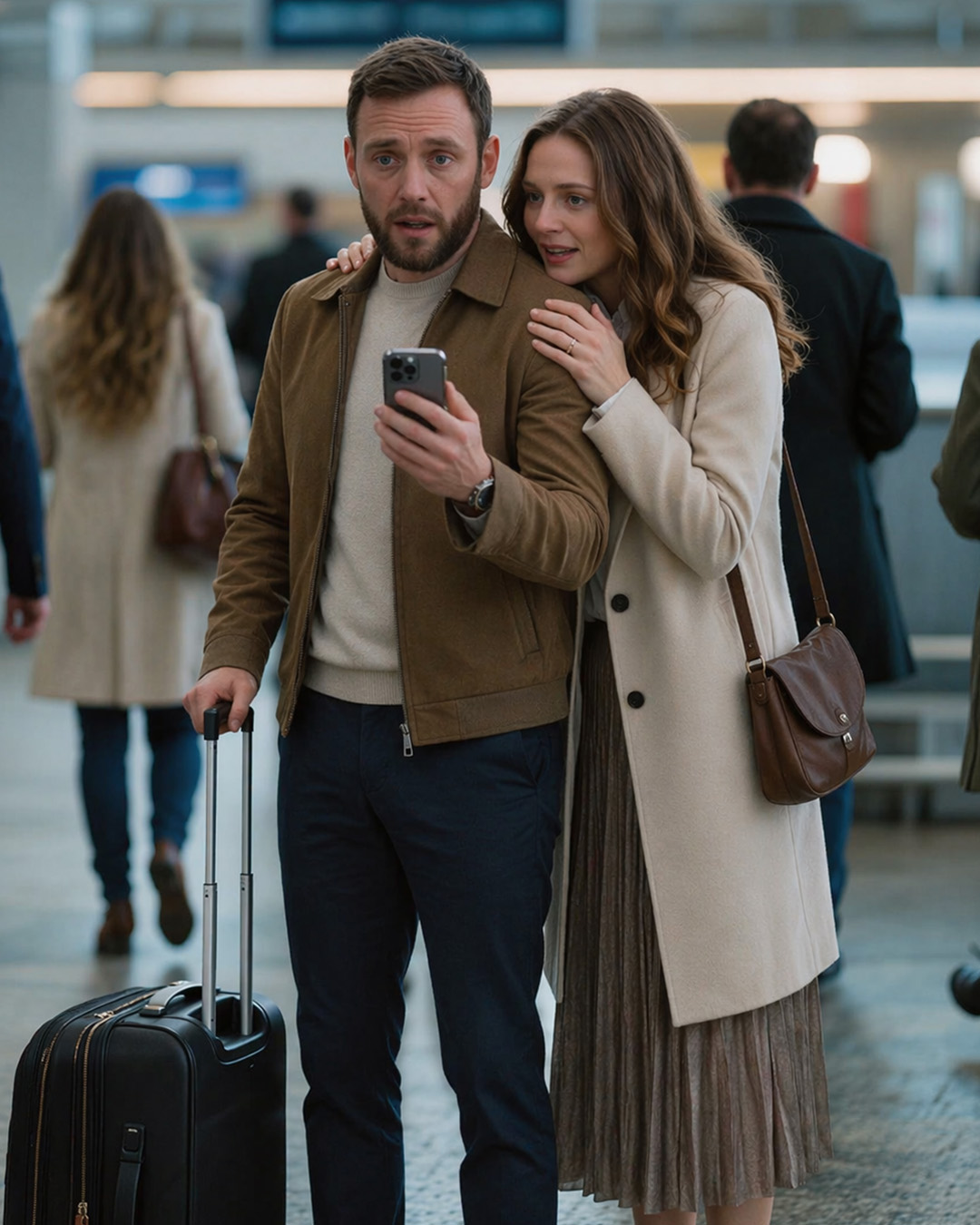
We did the consultation from a small pub in a Highland village, Harper and I huddled over my phone in a corner booth while Daniel explained things in plain English.
Bottom line: my parents had no legal right to my time, labor, or money. I was not responsible for their children. I never had been. Any suggestion that I had a legal duty to provide child care for my siblings was fiction.