Three years old.
“He died in a plane crash twenty-five years ago. You stayed home because you had a fever.”
I stared at him, unable to speak.
“Robert and Sandra took you in after the funeral. They were supposed to raise you like their own.”
His jaw tightened.
“But they didn’t. They took you, and they cut me out of your life. They told me you blamed me for your parents’ deaths. They told me you never wanted to see me.”
“I didn’t even know you existed.”
“I know.”
He sobbed once, quietly.
“Three years later, they told me you had died too. Some childhood illness. They sent a death certificate. I believed them.”
“They faked my death?”
“They erased you.” His eyes burned. “From me. From the family. They took my granddaughter and made her disappear.”
I could not speak.
Twenty-five years of being overlooked. Twenty-five years of being told I was not special, not enough, not wanted.
And all along, somewhere out there, someone had been grieving a child who was still alive.
“Why?” I whispered.
His hand tightened around mine.
“Because Daniel was my heir. Everything I built was meant for him. And when he died, it was meant for you. Robert knew that. As long as you stayed in my life, he got nothing.”
Money.
All of it for money.
“They stole me,” I said.
“They stole my life.”
“Yes,” he said, and his voice turned to steel. “And they will answer for it. I promise you that.”
Then he reached into his coat and pulled out a small vial.
“But first,” he said, “I need you to live.”
He rolled up his sleeve.
“I’m AB negative. Same as you. Same as Daniel.”
Then he turned to the nurse.
“Take my blood. As much as you need. Save my granddaughter.”
Three days later, I opened my eyes to sunlight.
Real sunlight. Not the cold electrical hum of the ICU.
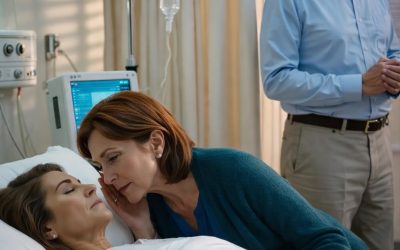
I had been moved to a private room—the nicest room in the hospital. Flowers covered every flat surface: roses, lilies, sunflowers. The air smelled like a greenhouse in spring.
My grandfather sat in the chair beside my bed exactly where I had last seen him.
He had not left.
Three days. Seventy-two hours.
He had stayed through every minute.
“You’re awake,” he said, voice rough with exhaustion, but his face lit up like Christmas morning.
“You’re still here.”
He gave a soft, incredulous laugh. “Of course I’m still here. I waited twenty-five years to find you. You think I’m going anywhere now?”
I tried to sit up. Pain tore through my chest.
He was instantly on his feet, adjusting the pillows, raising the bed, fussing over me with the kind of care I had spent my whole life imagining other people received.
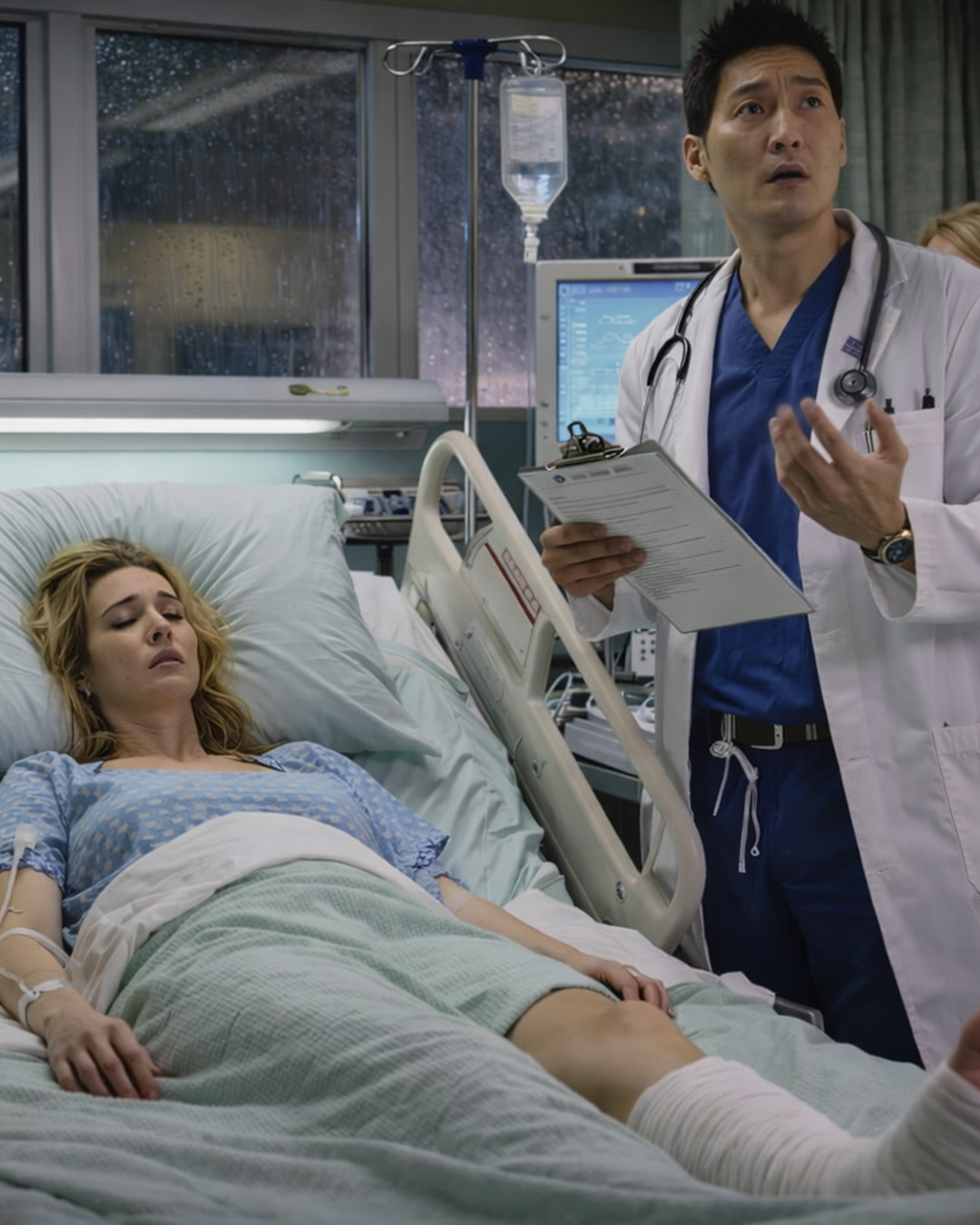
“Easy. Your spleen ruptured. Three ribs broken. Compound fracture in your left tibia. You are lucky to be alive.”
“I don’t feel lucky.”
“You will.”
He sat again.
“I promise you, Evelyn. From this moment on, everything changes.”
Over the next several days, he told me the truth.
The real truth.
My father, Daniel Harrison, had been the firstborn son. Brilliant, kind, a gifted surgeon who graduated at the top of his class from Johns Hopkins. According to my grandfather, I had his hands and my mother’s eyes.
“He could have run any hospital in the country,” Grandfather said. “Instead, he chose community clinics. Free surgeries for people who had nothing. He believed healing should never depend on money.”
My mother, Sarah, had been a nurse.
They met in the emergency department over a trauma case. Fell in love over twelve-hour shifts and burnt coffee.
“She was fierce,” my grandfather said, smiling through tears. “Tiny thing. Barely five-two. But she would go to war with anyone who mistreated a patient. Daniel used to say she was the bravest person he had ever met.”
They married in a small ceremony. No spectacle. Just family and love.
I was born a year later.
“The day you were born,” my grandfather said, voice shaking, “was the happiest day of Daniel’s life. He called me from the hospital crying. He said, ‘Dad, I finally understand what it means to love someone more than yourself.’”
He brought me photo albums.
Boxes of them.
A whole hidden childhood.
My father holding me as a newborn. My mother rocking me in a chair and singing. The three of us at Christmas. At the beach. At my third birthday.
I stared at my mother’s face for a very long time.
My face.
Same eyes. Same smile. Same stubborn chin.
Twenty-five years, and I had not even known what my own mother looked like.