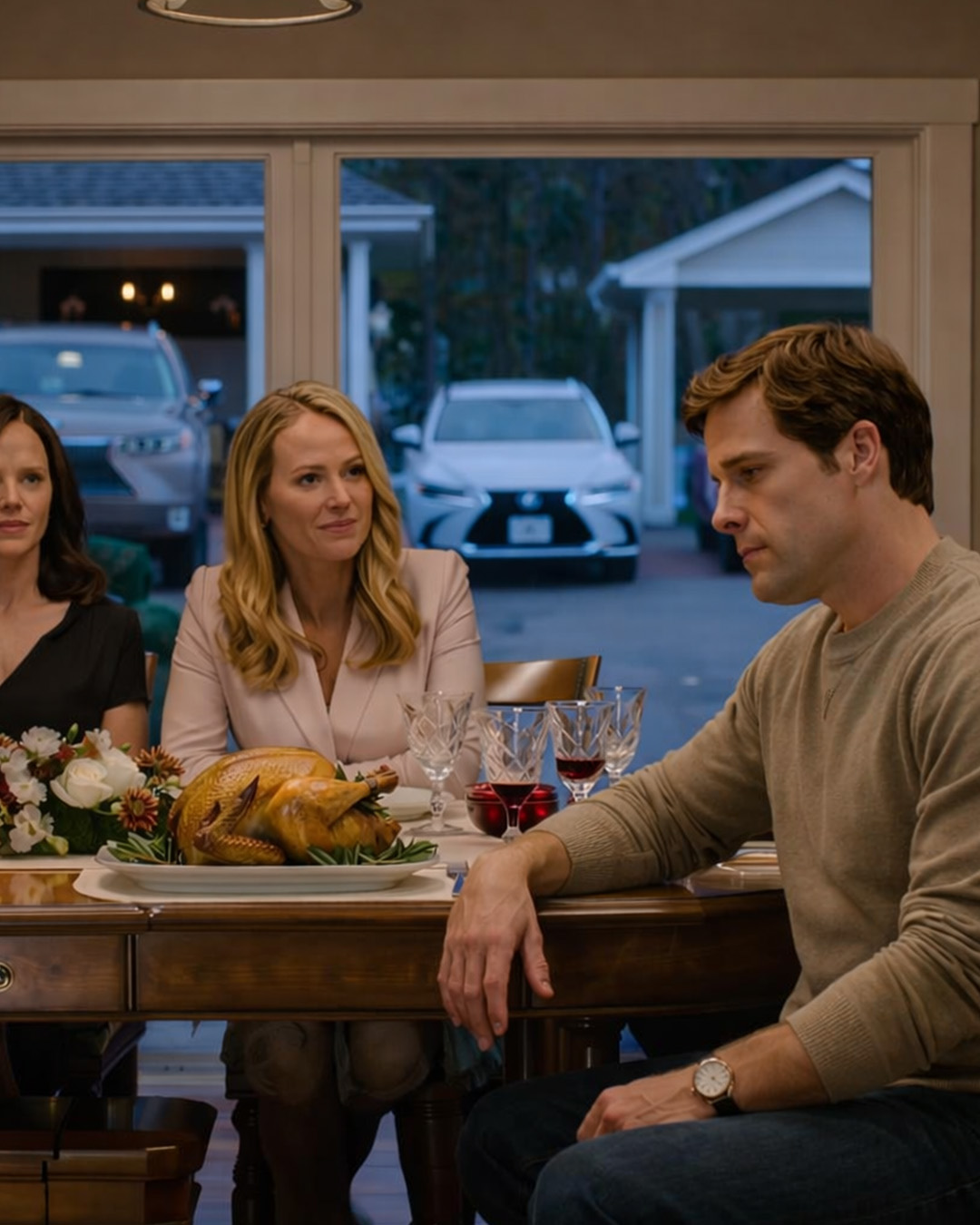
Linda nodded the way she nodded at school plays—present, polite, already thinking about the drive home.
“That sounds very worthwhile.”
Worthwhile. The cousin of nice. The whole family of words that meant not enough.
On the drive home Ethan was quiet for a long time. Then he said, “Your mom has a beautiful garden. She just doesn’t know how to let anyone else enjoy it.”
I almost told him everything right then—the science fair, the scholarship, the years of being the Aldridge footnote—but I didn’t, because explaining it would mean it was real, and I was still running the experiment where maybe the results would change if I just adjusted one more variable.
Three weeks before the wedding, my mother called.
“Vanessa, your father and I have been talking.”
Her church voice. The one she used for delivering verdicts.
“We just don’t think we can support this. A barn? With no proper reception? No planner? Sweetheart, this is—I’m sorry—but it’s a disgrace. To you. To the family name. To everything we raised you to.”
“Mom—”
“And frankly, it’s Ashley’s birthday weekend. We already booked the yacht. She needs this, Vanessa. She’s been under so much stress with the renovation, and your sister needs the shrimp tower. It’s her birthday.”
The shrimp tower.
My mother chose a shrimp tower on a rented yacht over her own daughter’s wedding. Delivered with the conviction of a woman who genuinely believed she was being reasonable.
I didn’t yell. I didn’t argue.
I said, “Okay, Mom,” and I hung up.
I sat in my car in the parking lot of my office for a long time. The engine was off. The windows were up. The world outside was doing that Minnesota spring thing where the light is bright but the air is still cold and everything looks crisp and clean and completely indifferent to what’s happening inside your chest.
The tears didn’t come for forty minutes.
They waited until I was in the bathroom on the third floor of the lab building, the one nobody uses because the hand dryer sounds like a jet engine. I locked the stall door and pressed my forehead against the cool metal partition and cried in a way I hadn’t cried since I was sixteen years old, standing alone on a stage holding a trophy nobody came to see.
Three deep breaths. Two fists unclenched. One decision I wasn’t ready to make yet.
The week after my mother called my wedding a disgrace, I made my first error at work.
It was a decimal point.
One decimal point in a data set of four thousand entries. The kind of mistake a first-year intern catches in review. Except nobody caught it, because nobody checks my work. They trust me. I’m the person who doesn’t make mistakes. I’m the person who triple-checks the triple-check.
That’s not a personality trait.
That’s a survival strategy I learned at the Aldridge dinner table. If you’re perfect, maybe they’ll notice. If you’re flawless, maybe they’ll turn their heads.
I caught the error myself at eleven p.m., sitting at my desk long after everyone else had gone home. I stared at the screen for a while. The cursor blinked. The office hummed that low, empty sound buildings make when they’re pretending to be asleep.
I corrected the decimal point, saved the file, and drove home in a silence that had nothing clean about it.
Claire noticed the next morning. She brought me coffee—the good kind from the place two blocks over, not the office machine that dispensed liquid regret—and set it on my desk without saying anything. She looked at me the way you look at a bridge you’re not sure can hold weight anymore.
“I’m fine,” I said.
“You’re wearing yesterday’s shirt,” she said.
I looked down.
She was right.
I hadn’t gone home to change. I’d slept in the parking ramp for three hours in the backseat of my Civic, which was not a decision I remembered making, which scared me more than the sleeping itself.
The next few days moved the way water moves under ice—slow, heavy, going somewhere you can’t see. I went to work. I came home. I ate what was available, which was mostly cereal and the last of a bag of pretzels that had gone soft. The apartment got quieter, not because anything changed about it—the same walls, the same furniture, the same coffee maker next to Grandma June’s recipe book—but because I was quieter inside it, like I was shrinking, occupying less space.
Ethan called every night. I answered because not answering would generate questions, and questions required energy I was routing elsewhere: into standing upright, into brushing my teeth, into the mechanical process of being a person who functions.
“How are you?”
“Good. Busy. Work stuff.”
“You want me to come over?”
“No, I’m fine. Really. Just tired.”
I wasn’t fine.
I was doing the thing I’d done my whole life: collecting data points that proved I didn’t matter and refusing to accept the conclusion.
My mother chose a yacht. My father said nothing. My sister didn’t call.