“I thought you would understand once it was done. Once Brianna had what she needed. And things had settled. I thought you would see that it made sense.”
I had known, in some part of myself, what she would say. I had known it before I asked. And still, hearing it stated plainly, there was a quality to the moment that I had not entirely anticipated. Not surprise.
Something more like the feeling of a long-held breath finally leaving the body.
The confirmation of something you had hoped was wrong and now knew was not.
“I don’t think you meant to hurt me,” I said. “I want to be clear about that. I don’t think cruelty is what this was.”
She made a sound that might have been the beginning of relief.
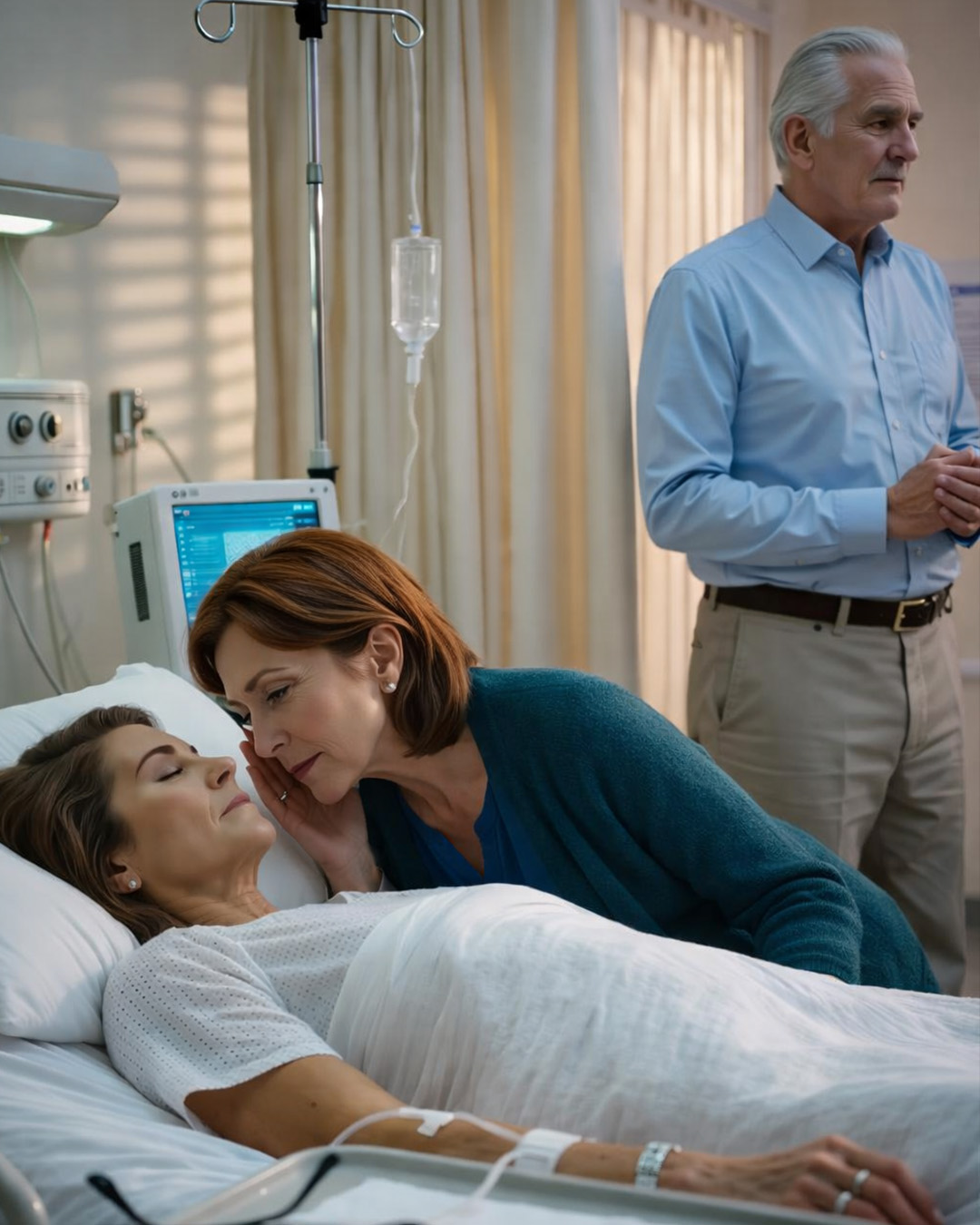
“But,” I said, “you were going to sell my house while I was sedated in a hospital bed. You had a price. You had an agent. You had a timeline. And when you talked yourself into it, you used the same logic you have used my entire life. Meredith is fine. Meredith will understand. Meredith doesn’t need this the way someone else does.”
I paused.
“I have been fine because I learned very young that being fine was the only role available to me in this family. I have been fine because I made myself fine. Without help. Because the help went somewhere else. And I am done being leveraged against because of it.”
She said my name.
“The letter stands,” I said. “The instruments are in place. My firm is supporting the complaint to the real estate commission. If you contact any agent or title company about my property, it will be treated as a legal matter. That is not a threat. It is what the letter says.”
A long silence.
Then my father’s voice came on the line. He had taken the phone from her hand.
This was, in thirty-eight years, something he had done perhaps twice.
“Meredith,” he said.
“Dad,” I said.
A pause.
I could hear him in it. The weight of a man who had spent decades choosing the path of least resistance and now found himself at the end of a longer path than he had bargained for.
“I told her to call you first,” he said.
The words were small. They were not an apology.
They were the closest thing to one he could produce.
And I understood that for him, saying them at all was an act that cost something.
“I know, Dad,” I said.
A beat of quiet.
“The tomatoes are coming in,” he said. “Real good this year.”
I did not know what to do with that for a moment.
Then something in me, something that was not the part keeping records or managing documents or holding a steady line, shifted very slightly, the way a floorboard shifts when weight moves off it.
“That’s good, Dad,” I said.
I heard him pass the phone back to my mother.
“Are you cutting us off?” my mother said.
Her voice had changed again. Smaller now. More like herself than the version of herself she performed.
“No,” I said. “But things are different now. You know that they are.”
She did not respond.
“I have to get to work,” I said. “I’ll talk to you later.”
I ended the call.
I set the phone on the desk.
Outside, the morning was clear and pale, the kind of October sky that looked fragile, like something behind glass. A pigeon landed on the window ledge across the street, looked at nothing for a moment, and then flew away.
I opened my laptop.
I sat with the quiet of the office for a while, the hum of the building, the distant sound of the elevator.
Then I opened a new document and typed at the top:
Things that are now true.
I sat for a moment with the cursor blinking.
Then I started writing.
The list was shorter than the previous one.
Five items.
I read it over twice.
Everything on it was accurate.
Everything on it would remain accurate tomorrow and the day after and the day after that, regardless of what anyone said or chose to believe.
I saved it to the Reference folder.
Then I picked up the stack of title commitment letters I had been working through, found the place where I had left off, and continued.
The work was the same as it had always been.
Documents. Instruments. Recorded fact.