I had signed it because I was about to go under general anesthesia and I did not want to argue, and I told myself it was a reasonable precaution.
I had told myself a lot of things over the years.
I added the June phone call to the document on my laptop. It became entry number six.
Then I opened a second document, a blank one, and I started writing down what I knew about property law in North Carolina.
I had been working in real estate law for a decade. I knew exactly what tools were available to a property owner who wanted to make their home legally untouchable.
A mechanics lien recorded with the county attaches to the title and cannot be removed without the lien holder’s consent. It does not prevent the owner from living in or using the property. It does prevent any sale or transfer from proceeding without the lien holder’s involvement.
I was both the property owner and the lien holder.
This was unusual.
It was also entirely legal.
A transfer-on-death deed designates where a property goes upon the owner’s death, bypassing probate entirely. Once registered, it is a matter of public record. It can only be revoked or changed by the owner.
A formal revocation of an existing power of attorney, filed with the county and sent certified mail to the named agent, terminates that authority permanently.
I made three phone calls over the following week.
I completed all the paperwork on a Tuesday afternoon while eating a sandwich and listening to hold music. I paid thirty-two dollars. I put the confirmation emails in a folder and went back to my regular work.
I did not feel triumphant.
I did not feel relieved.
I felt the way you feel when you have been watching a storm build on the horizon for a long time and you have finally, quietly, closed all the windows.
The storm was still coming.
The windows were closed.
That was all there was to do.
Three months later, I got the call that my lupus had progressed enough to require a biopsy.
My mother came to the hospital.
She brought a container of food and asked the nurses questions about my prognosis and used my doctor’s first name even though they had never met. She held my hand while they wheeled me into the procedure room, and she squeezed it once, and I thought, as the sedation started pulling me under, she loves me.
She does.
I have never doubted that.
What I doubted was whether love in this family had ever meant the same thing to both of us.
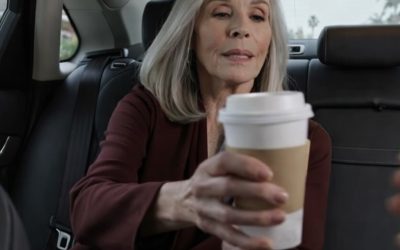
Patricia Nguyen was waiting at the hospital entrance when they discharged me on the third day. She was leaning against her car with her arms crossed and a paper cup of coffee in each hand, and she did not say anything when I came through the sliding doors.
She just held out one of the cups.
I took it.
We walked to the car.
She drove.
We were out of the hospital parking lot and onto the main road before she spoke.
“Okay,” she said. “Tell me.”
I told her about the whisper. My mother’s voice, low and certain.
“She won’t know.”
“Call Leon tonight.”
My father’s silence. The particular quality of a room when the people in it believe you cannot hear them.
Pat listened without interrupting.
She did this well. Twenty-two years of reading legal documents had trained her to take in information completely before forming any response. And she brought this same discipline to conversation in a way I had always respected.
When I finished, she was quiet for a moment.
“How long ago did you file the lien?” she said.
“Eight months.”
She nodded slowly. She took a sip of her coffee. She kept her eyes on the road.
“Good girl,” she said.
We drove the rest of the way mostly in silence, which was the right thing. Some information needs time to settle before anyone talks about it further.
Pat understood this. It was one of the things that had made her a good colleague and a better friend.
She came inside when we got to my house.
Staple investigated her shoes thoroughly and then sat on her feet, which was his way of indicating provisional acceptance.
Pat looked down at him.
“This cat has never once done this with me.”
“He does it with everyone eventually,” I said. “He just makes you wait.”
She laughed, which was also the right thing.
I made more coffee, real coffee this time, in the small Italian press my grandmother had left me along with the decorative spoons.
I brought it to the living room table and we sat.
The afternoon light was coming through the west-facing kitchen window, the way it always did at that hour, turning the far wall a particular shade of amber that I had never found a satisfactory name for.
Staple abandoned Pat’s feet and went to sit in the patch of warmth on the floor.
“You know what you did is unusual,” Pat said.
It was not a question.
“I know.”
“Liening your own property.”
“It’s legal,” I said.
“I know it’s legal. I’ve been doing this for twenty-two years.” She wrapped both hands around her mug. “I’m saying it’s unusual. Most people don’t think that far ahead.”
“Most people don’t have the same information I have.”
She looked at me for a moment.
“You really thought she’d try.”
I did not answer immediately.
Outside, a car went slowly down the street. Somewhere nearby, a lawnmower ran. The regular sounds of a regular afternoon.
“I thought it was possible,” I said finally. “I hoped I was wrong.”
Pat set her mug down.