A.H.
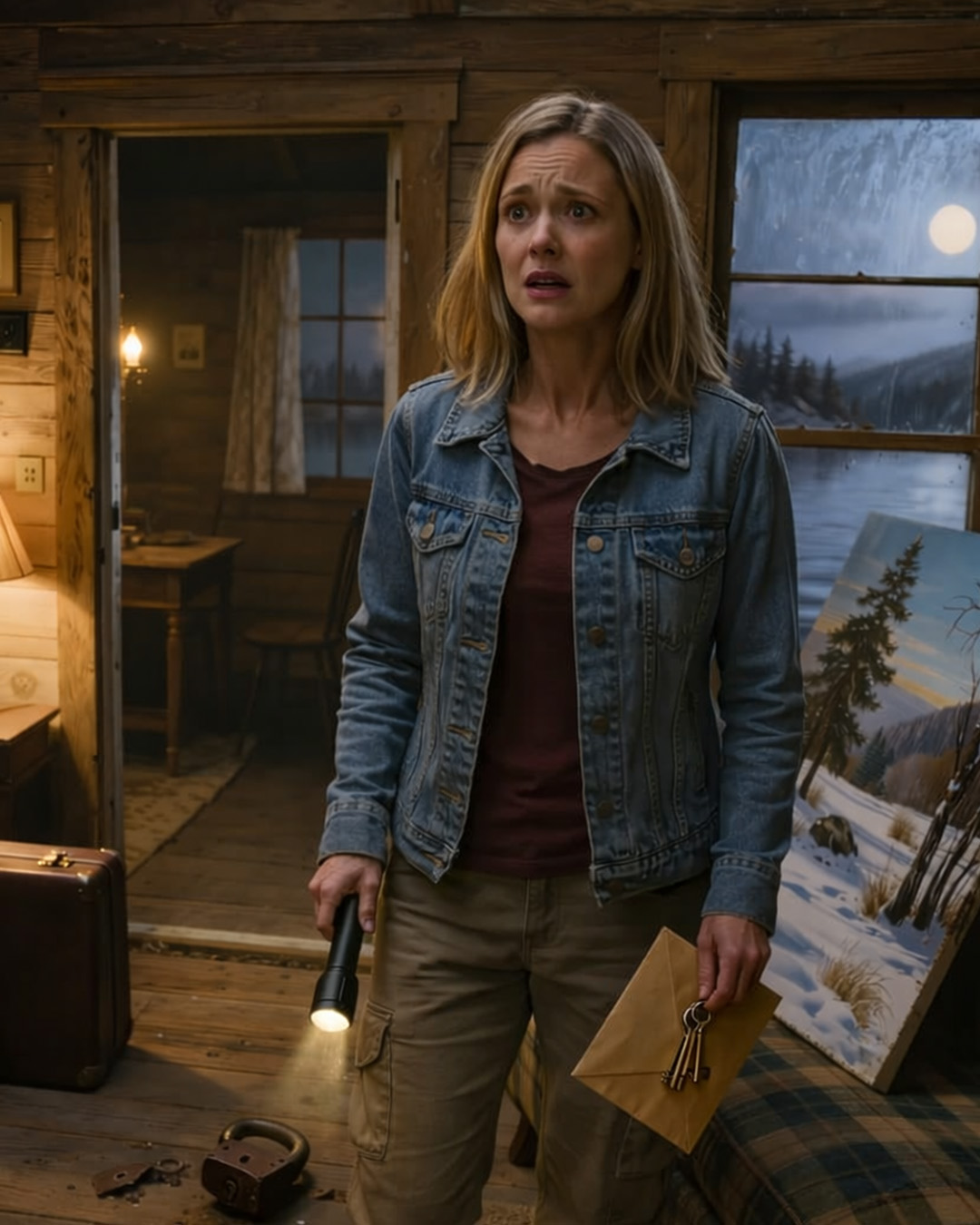
I did not sleep that night. I lay in the bed he used to sleep in and stared at the ceiling, holding the brass key so tightly in my fist that it left a mark in my palm.
A patient man.
That was what he called himself.
Not rich. Patient.
The next morning, I drove to Milbrook.
It took twenty-two minutes. Main Street was only four blocks long, a hardware store, a diner, a post office, and then there it was, First Heritage Bank, a stone building that looked older than the town itself.
I walked in with the key in my jacket pocket and the business card in my hand.
The woman at the front desk looked at me the way small-town bank employees always look at strangers, polite, but already cataloging. I told her I was looking for a safety deposit box.
“Box 1177,” I said.
She blinked. “You’ll need to speak with our manager. Can I have your name?”
“Clare Ashford.”
Something changed in her face. Not exactly surprise. Recognition. As though she had been expecting the name for a long time, just not the face that came with it.
“One moment, please.”
A minute later, the manager walked out. He was a man in his sixties with silver hair and reading glasses pushed up on his forehead. He looked at me for a long moment.
“Arthur’s granddaughter,” he said.
It was not a question.
Part 3
“Yes,” I said.
“He told me you’d come eventually,” the man said. “I just didn’t know when.”
He held out his hand. “I’m Gerald. I’ve managed this branch for thirty-one years. Your grandfather was one of our oldest clients.”
He led me downstairs. The safety deposit vault was in the basement, cool and silent, lined with rows of metal boxes. Box 1177 sat on the bottom shelf of the third row.
Gerald handed me the bank’s key, and together we turned both locks.
The box was larger than I expected.
Inside was a thick folder, a second sealed envelope, and a small leather journal held closed with a rubber band.
“I’ll give you some privacy,” Gerald said. Then he paused at the door and added, “For what it’s worth, he talked about you every time he came in. Every single time.”
I opened the folder first.
The top document was a deed.
Then another deed.
Then another.
There were seven deeds altogether, one for each parcel of land surrounding the lake. Two hundred forty-three acres, purchased over a span of thirty-seven years, beginning in 1978.
My grandfather, the man who lived in a one-bedroom cabin and painted landscapes and drove a truck older than I was, had quietly bought nearly every piece of land around that lake.
Have you ever been completely wrong about someone you thought you knew? Tell me in the comments, because I was about to find out just how wrong I had been about the man who raised me.
The journal was the key to everything.
I sat in a small conference room Gerald let me use and read it from cover to cover. It was not a diary. Grandpa Arthur was not that type. It was a ledger. Dates. Amounts. Parcel numbers. Notes.
Every purchase was documented in his careful handwriting.
Forty acres north of the lake. Eight thousand two hundred dollars. Farmer needed cash for his daughter’s surgery. Fair price. Good land.
Twenty-two acres east of the access road. Eleven thousand four hundred dollars. Bank was going to foreclose. Bought it before they could. Family does not know it was me.
Thirty-five acres including the ridge. Twenty-seven thousand dollars. Used timber sale money from the north parcel. Replanted everything.
He never borrowed. He never took a loan. Every purchase was made with cash saved from decades at the paper mill, from selling firewood, from small timber operations on the land he already owned. He would buy one parcel, manage it carefully, and use the income from that piece to buy the next.
Patient.
Methodical.
Invisible.
The second envelope held a letter from Thomas Wilder, dated the year my grandfather died. It was a legal summary of everything. The trust. The holdings. The current assessments.
I read the number three times.