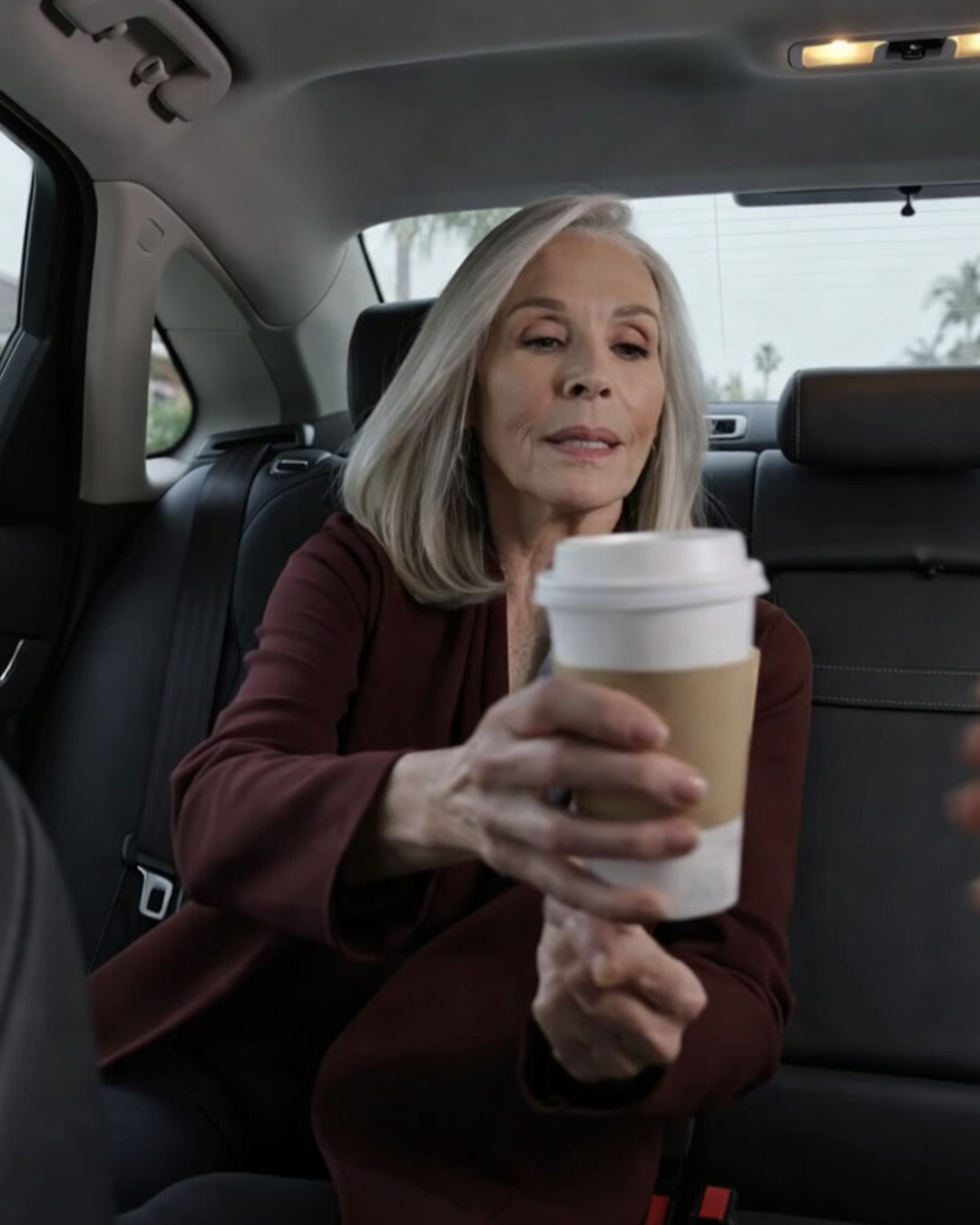
“Yes. Third time this week.”
I told myself it meant nothing. Los Angeles is full of people who seem to belong nowhere and everywhere at once. Still, that night I locked the door twice.
The following week I noticed an older sedan parked across from my house. Windows tinted. Rear bumper scratched. Engine cold. It stayed there overnight and disappeared by morning. I mentioned it to Aaron the next night.
He asked what color it was, whether the plate was from California, whether I remembered the dent on the rear bumper.
“You notice a lot,” I said.
“I have to,” he replied. “It is how I stay alive.”
It was the first time he said anything that hinted at fear rather than habit.
A few nights later I found my gate unlatched. The latch was old and rusted and had been unreliable for years, so I told myself that was all it was. Nothing. Just old hardware in an old yard. Aaron did not care for that explanation. He asked whether anything was missing.
I said no.
That was not entirely true.
A legal pad I usually kept by the phone was gone. Most of what had been written on it was ordinary life: grocery reminders, a note to call the plumber, the name of a vitamin Daniel used to take. But one page held work notes too—file numbers, initials, dates, details I had jotted down because I needed to remember which cases required a second look. I had convinced myself I misplaced it.
Aaron did not try to convince me otherwise.
“If anything else feels off,” he said, “you tell me immediately.”
The trust between us did not arrive all at once. It built quietly, layer by layer, over routine, over shared silence, over small gestures that said, in ways words often cannot, you are not invisible.
What I did not know was that the man beneath the streetlight had been counting the minutes between my arrival home and the moment my lights went out. I did not know that the parked car belonged to someone who knew my schedule better than I did. I did not know that somewhere, someone had already decided I was becoming a liability.
And what I did not know was that Aaron had already begun connecting pieces that frightened him. Because the drunk passenger he kept driving had started talking about audits. He talked about records being moved. He talked about a woman who asked too many questions. He talked about a house on my street as though it were already an unlocked door.
The night Aaron decided to act, he did not think of it as bravery. He thought of it as the last chance to keep another person from paying for his silence.
By then, trust was no longer a comfort. It was the only thing standing between routine and catastrophe.
The night he missed my exit, the city felt wrong before I understood why. Rain had just started, thin and oily, turning streetlights into smeared yellow halos over the pavement. I slid into the back seat, handed him the tea, and waited for the familiar right turn two blocks later.
Instead, he kept going.
“Aaron,” I said gently, leaning forward, “you missed Cedar.”
He did not answer right away. His jaw looked tight. His hands were fixed on the steering wheel in a way that suggested not tension alone, but preparation.
“I need you to stay calm, Lydia,” he said at last. “And I need you to listen.”
My stomach dropped. “Where are we going?”
“Somewhere we can talk without being seen.”
Fear has a sound. It is not always loud. Sometimes it is quiet and sharp and immediate, like a sudden change in breathing that even you can hear inside your own chest.
“You’re scaring me,” I said.
“I know. I’m sorry. But what I’m about to tell you is worse if I say it on your street.”
He turned into an office park that had long since emptied for the night and parked beneath a flickering security light. Rain tapped softly on the roof. When he switched off the engine, the silence felt immediate and close.
Then he turned in his seat to face me fully.
“Do you know a man named Victor Hail?”
The name hit me like a file slipping from a stack. I had seen it before. Not often, but enough to recognize it.
“I have seen the name,” I said carefully. “Why?”
Aaron exhaled slowly. “I’ve driven him eight times in the last six weeks. Always late. Always drunk. Always talking like he thinks the car disappears around him.”
My pulse began to pound in my ears. “What does that have to do with me?”
He unlocked his phone and held it out toward me.
“Because last Friday night,” he said, “he said your full address out loud. Then he said, ‘She’s the one pulling files. She’s careful, but she isn’t invisible.’”
My mouth went dry.
“There’s more,” Aaron said. “He said you work nights. He said your house is empty on Tuesdays and Fridays. He said if you take anything home, it will be there.”
“Take what home?” I whispered.
“Files. Notes. Evidence.”
The air in the car felt suddenly thick, as though the rain had sealed us inside something smaller than a vehicle.
“You can’t be serious,” I said. “He doesn’t even know me.”
“He knows your routine,” Aaron said. “And he knows your street.”
He swiped to another screen. Dates. Pickup locations. Fragments of conversation. Notes written with exacting precision.
“Tonight, before I came to get you, I drove past your block.”
My heart lurched. “Why?”
“Because Victor mentioned you again yesterday. He said something about tonight being a good time.” Aaron’s voice dropped even lower. “His car was parked across from your house when I drove by. Engine warm. Lights off.”
I felt dizzy. “That does not mean anything,” I said, even as my hands began to shake.
Aaron held my gaze. “I watched him get out. I watched him walk to your gate. I watched him try your front door.”
The world tilted around me.
“He tried my door?”
“Yes.”
I could barely hear my own voice. “Did he get in?”
“No. But he didn’t leave either. He stood there looking through the front window like he was confirming something.”
Tears burned behind my eyes so quickly it felt like being caught off guard by my own body.
“Why are you telling me this?” I asked, though some part of me already knew.
“Because I am not dropping you off tonight,” Aaron said. His voice was steady now. “And because you are not going home.”
I shook my head, trying to force the world back into something reasonable. “I don’t understand. I don’t know what he thinks I have.”
Aaron leaned back slightly, and for the first time I saw not just concern in his face, but exhaustion too, the kind that comes from recognizing a pattern you hoped you were wrong about.