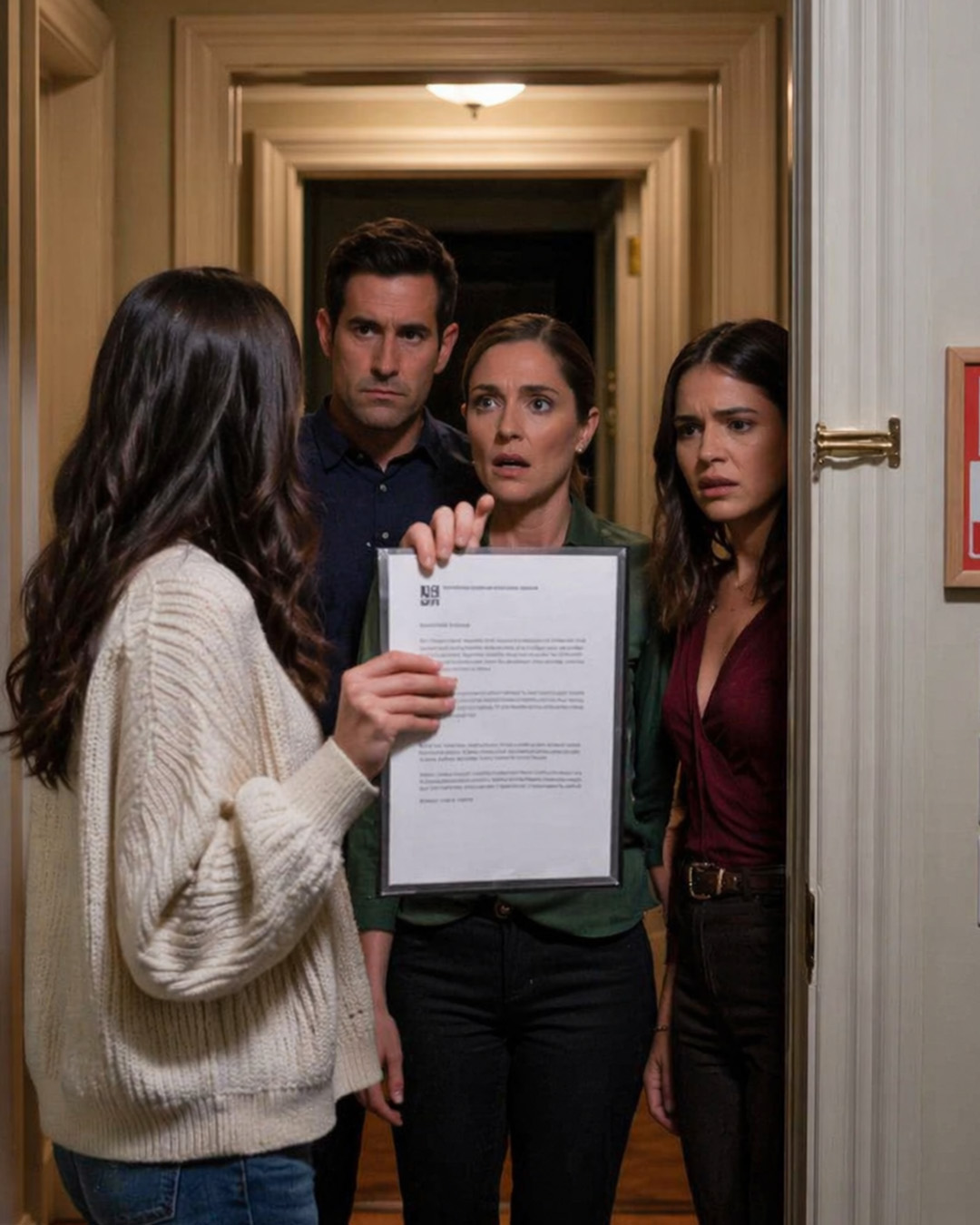
I gripped the counter. “Discrepancies?”
“Yes, Ms. Johnson. It appears your name was crossed out and replaced. The signature doesn’t match.”
The remodel. The marble counters. Every puzzle piece slid into place. “Thank you,” I said. “Please send everything to my attorney.”
By midnight, Julia confirmed the filing—inheritance fraud. Another freeze. Another layer of truth.
In the following days, the story spread quietly through the family. One by one, relatives reached out—cousins I hadn’t heard from in years. “They borrowed from us, too.” “They never paid anyone back.” “You’re not crazy, Sophia.” Every message was a small rescue boat in a flood I’d been drowning in for years.
When the official court notice arrived, Julia called. “They’ll try to contact you again,” she warned. “Don’t engage—even if they apologize.” She paused. “Especially if they apologize.”
The next morning, my inbox exploded again. Mom’s new tactic was remorse. “We forgive you. Please forgive us.” Forgiveness as leverage—the oldest trick. I forwarded the email to Julia and archived the thread.
By the end of the week, the house was no longer theirs. The deed—still under my name—sold within days. Julia wired the proceeds to my account. Watching the confirmation line appear felt nothing like revenge. It felt like balance.
Kayla tried once more, a final text: “You won.”
I typed back, “No one wins when family becomes debt,” then muted her number for good.
That night, the city outside flickered steady, indifferent. I sat by the window—the same one that had once reflected every sleepless night I spent saving them. Now it reflected something new: me, alone but unburdened. Somewhere out there, they were learning how to live without me. And for the first time in my life, I didn’t feel guilty for letting them.
By the time the court finalized everything, weeks had passed in a strange, quiet rhythm. Julia sent me a short email: “Case resolved. Repayment agreement signed. Probate reversed. You’re clear.”
Clear. The word felt foreign. Their accounts were frozen and their house sold—their debts legally tied to their own names for once. The silence that used to haunt me had turned into peace. I no longer woke to emergency calls or “just one more favor.” My mornings were mine again.
I bought a small apartment downtown. Nothing grand—just clean walls, sunlight, and no ghosts. Evan helped me move in. He didn’t say much, just handed me a cup of coffee and smiled like he understood what freedom tasted like. The first night there, I opened my old spreadsheet—the one where I’d once tracked every dollar I’d spent on them. I stared at the numbers for a long time, then hit delete. Watching it vanish didn’t feel like loss. It felt like release.
Word got around that my parents were renting a small house outside the city. Kayla was working part-time somewhere she hated. I didn’t feel satisfaction, just distance. They were finally living the life they’d built without me holding it up.
That night, for the first time in years, I slept through till morning. No guilt, no noise—just the steady, quiet hum of a life that finally belonged to me.