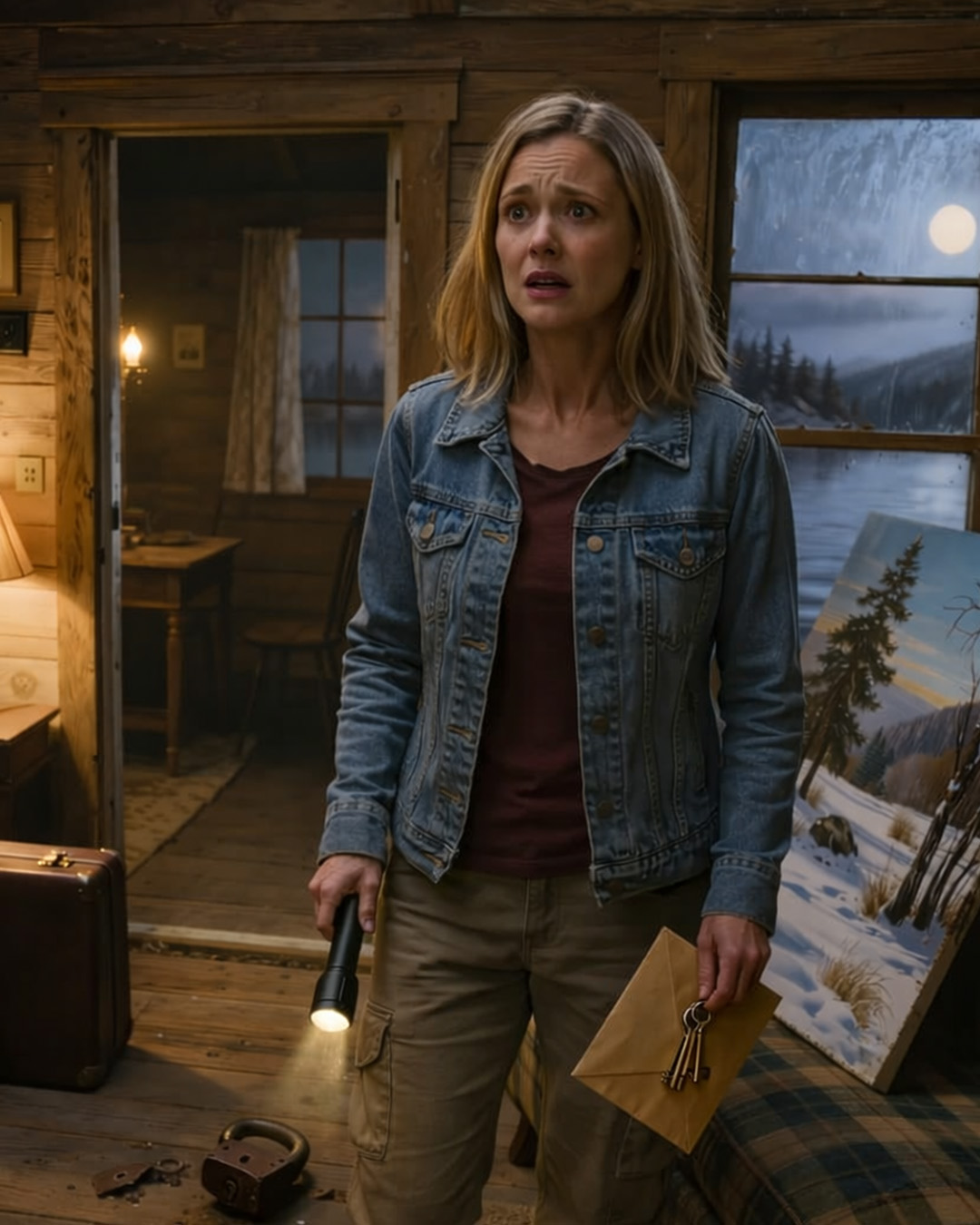
Three days after the legal notice arrived, while I was waiting for Thomas’s response to go out, I did something I had not done since childhood. I went to the corner of my grandfather’s bedroom where he kept his supplies. Brushes. Oil paints. Two wooden easels. Blank canvases leaning against the wall, everything covered in dust, everything waiting.
I cannot paint. I never could. When I was little, I smeared color across paper while Grandpa Arthur painted landscapes that looked like windows into another world. He never corrected me. He only said, “Paint what you see, not what you think you should see.”
So I set up his easel on the porch, opened the paints, and started painting the lake.
It was terrible.
That did not matter.
“They withdrew everything,” Thomas said over the phone. “Protocol B worked. Brandon’s lawyer didn’t even try to respond. He just filed to dismiss.”
I set the brush down. Blue paint dripped onto the wooden porch floor.
“What does that mean?”
“It means the trust is yours. No dispute. No conditions. Nobody can take it.”
Then he added, “Lake View has called three times this week. Scott Kesler is getting anxious. Based on public filings, their financing approval expires in six months. If they don’t close the land acquisition by then, they lose their investors.”
Six months.
My grandfather taught me patience. But he also taught me that patience was not about waiting. It was about knowing what you were waiting for.
I knew what I was waiting for.
That night, I drew up a plan. Not a revenge plan. A plan for the life I wanted from that point on.
I did not want to sell the land. My grandfather spent thirty-seven years building it. Selling it would erase the shape of every decision he made.
But two hundred forty-three acres of unused land do not pay bills.
On the final page of the journal was a line I had read before but had not understood until then.
Land is power, but power is not selling. Power is deciding who uses it, how they use it, and for how long.
A lease.
Not a sale.
I would keep every acre. Every deed would stay in my name, and Lake View would pay for the right to use the land, not own it. A sixty-year contract with a review every decade. Guaranteed annual income. Full control.
I called Thomas.
“I have a proposal,” I said, “but I need you to tell me if it’s legally possible.”
He listened. Asked questions. Then went quiet for nearly a full minute.
“It’s possible,” he said at last. “And it’s exactly what your grandfather would have done.”
Then his tone changed.
“But Clare, I need to ask you something. Not as your lawyer. As someone who knew Arthur his whole life. Are you sure you don’t want to sell and walk away? Start over somewhere else? Nine million dollars would give you a lifetime without worry.”
I looked through the window at the lake. It was dark outside. The first stars were beginning to show.
“My grandfather had thirty-seven years to sell and leave,” I said. “He never did.”
Thomas was quiet for a second.
Then he said, softly, “All right. Let’s build the lease.”
The meeting took place on a Wednesday morning. It had rained all night, and the air smelled like washed earth and pine needles. I drove the road that followed the lake, and for the first time, I did not look at that landscape like a woman who landed there because she had nowhere else to go.
I looked at it like the owner.
Scott Kesler brought a team this time. His attorney. A financial analyst. And a man I had never seen before, older, with completely white hair and a suit that probably cost more than everything in my two suitcases put together.
He was the investment director from Mercer Capital.
Thomas and I sat on one side of the table. They sat on the other. Four against two.
But I had something they did not.
I had the land.