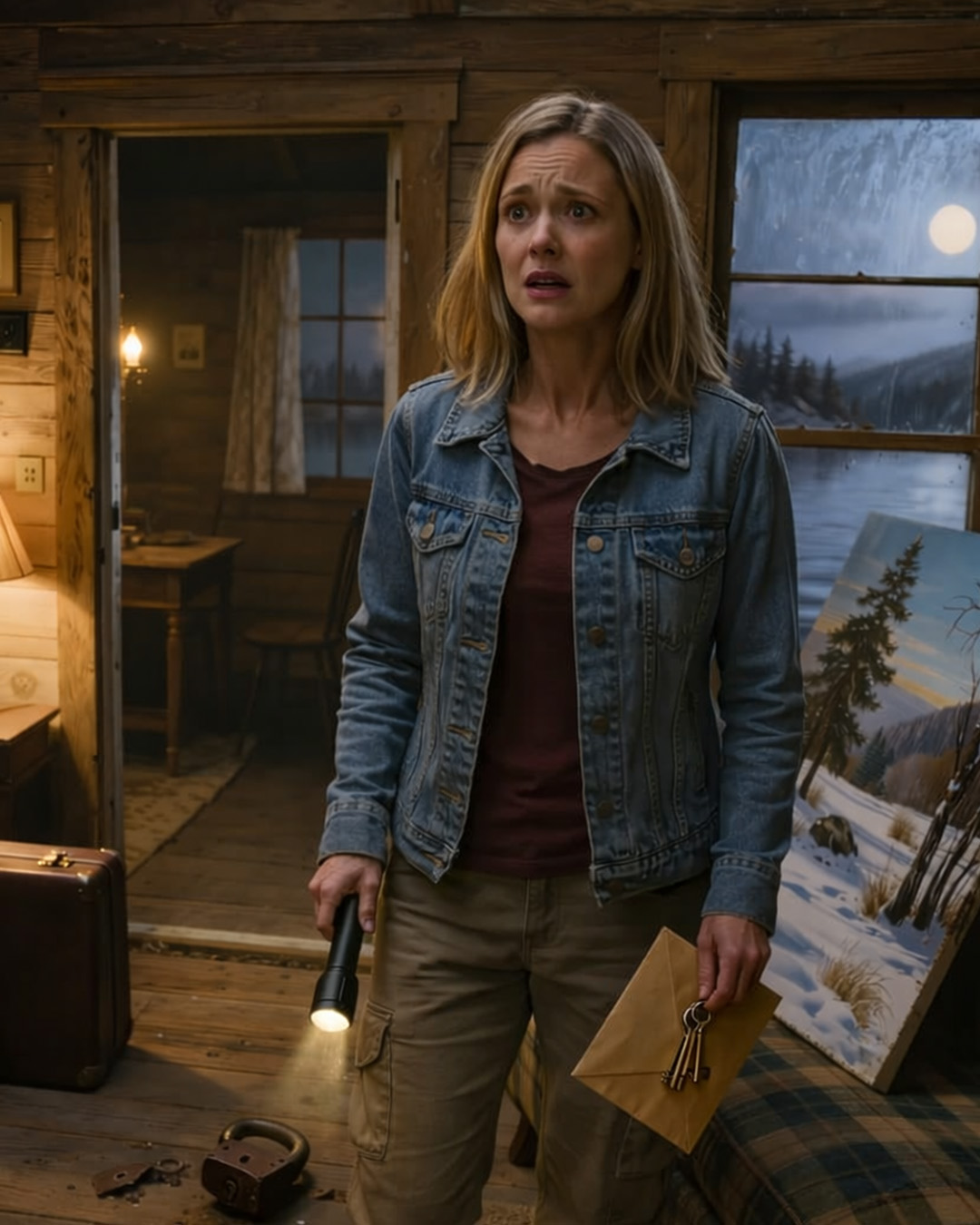
Before I left, Ruth told me one last thing. Arthur had asked her to keep an eye on the cabin after he died. If I showed up, she was to welcome me. But she was never supposed to come looking for me first.
“Why?” I asked.
“Because if someone told you,” Ruth said, “you’d doubt it. If you found it yourself, you’d believe it.”
Back at the cabin, I opened the journal to the 2019 page and read the last entry again. This time I noticed something I had missed before, written below it in smaller, nearly faded letters.
If he comes before her, Ruth will know. If she comes before him, the land will take care of the rest.
The lawyer’s letter arrived on a Tuesday.
Thomas called me at eight in the morning.
“We received a legal notice,” he said. “Brandon is contesting the trust.”
I sat down so fast the kitchen chair scraped across the floor.
“On what grounds?”
“He claims the trust should have been disclosed during the divorce proceedings as a potential asset. He says by failing to disclose it, you acted in bad faith. He wants to reopen the case.”
“I didn’t even know the trust existed during the divorce.”
“I know. That’s why his argument is weak. But weak doesn’t mean it disappears.”
If a judge reopened the case, it could drag on for months, maybe a year. During that time, any negotiation with Lake View would be frozen. That was exactly what Brandon wanted. Not to win. To buy time. To wear me down.
I knew that tactic intimately. I had lived beside it for twelve years. Brandon never screamed. He never threatened you in obvious ways. He just exhausted you until agreeing with him felt like the only way to breathe.
“How much will it cost to fight this?” I asked.
“If it goes to court, forty to eighty thousand.”
I had eleven thousand dollars in my account.
And while there was open litigation over the trust, the land was frozen. It could not be used as collateral. It could not generate income. No bank would touch it while the dispute was pending.
Nine million dollars in land, and I could not access a cent of it.
That was the point.
I sat in my grandfather’s kitchen chair and looked out his window at his land, and then I opened the journal again.
Page forty-seven held a note unlike any other.
If there is a legal challenge to the trust, Thomas has protocol B in the gray filing cabinet, third drawer, green folder. I paid for the best. You won’t need to pay again.
I called Thomas immediately.
“Protocol B,” I said. “Gray filing cabinet. Third drawer. Green folder.”
There was silence, and then a low laugh on the other end. Not amusement. Admiration.
“I’d forgotten,” he said. “Your grandfather had me prepare that in 2018.”
Part 5
Protocol B was exactly what it sounded like.
A complete preemptive defense package. Independent legal opinions confirming the trust’s separation from my marital assets. Notarized declarations stating that the beneficiary had no prior knowledge of the trust. A letter from Arthur himself explaining why the trust had been kept confidential.
“Will it hold?” I asked.
“Clare,” Thomas said, “your grandfather paid three different lawyers to review this. One in New York, one in Boston, one here. All three signed off. It’s airtight.”
I closed my eyes and held the phone with both hands. The pendulum clock in the living room kept ticking.
“Send the response,” I said. “Use everything.”
“Gladly.”
My grandfather had not only bought the land. He had not only built the trust. He had wrapped a legal wall around all of it and left me the key.
Patient.
Methodical.
Invisible.
Brandon’s lawyer withdrew the challenge eleven days later.
Thomas called with the news in the middle of a Thursday afternoon while I was standing on the porch with paint on my hands.
That deserves an explanation.